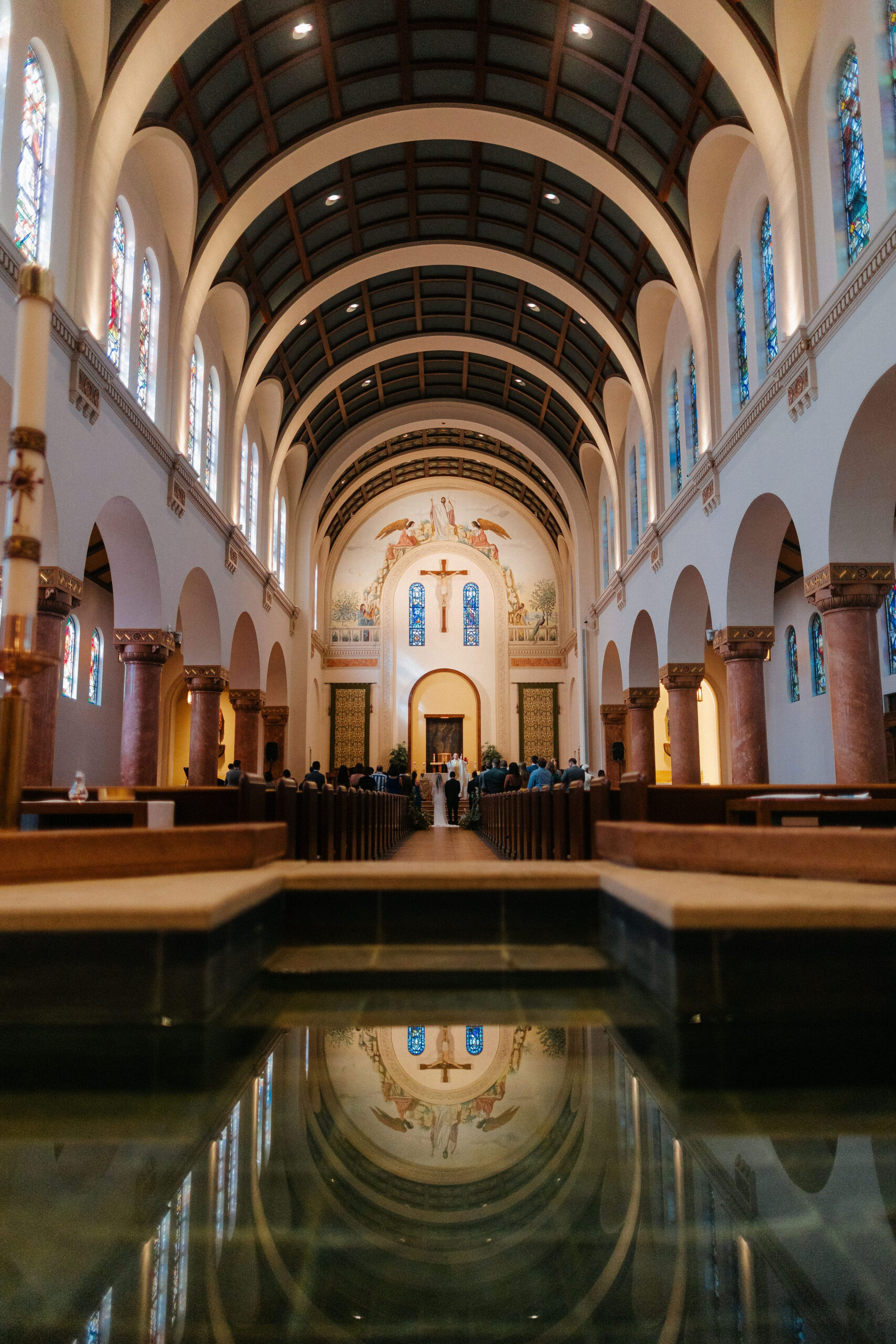
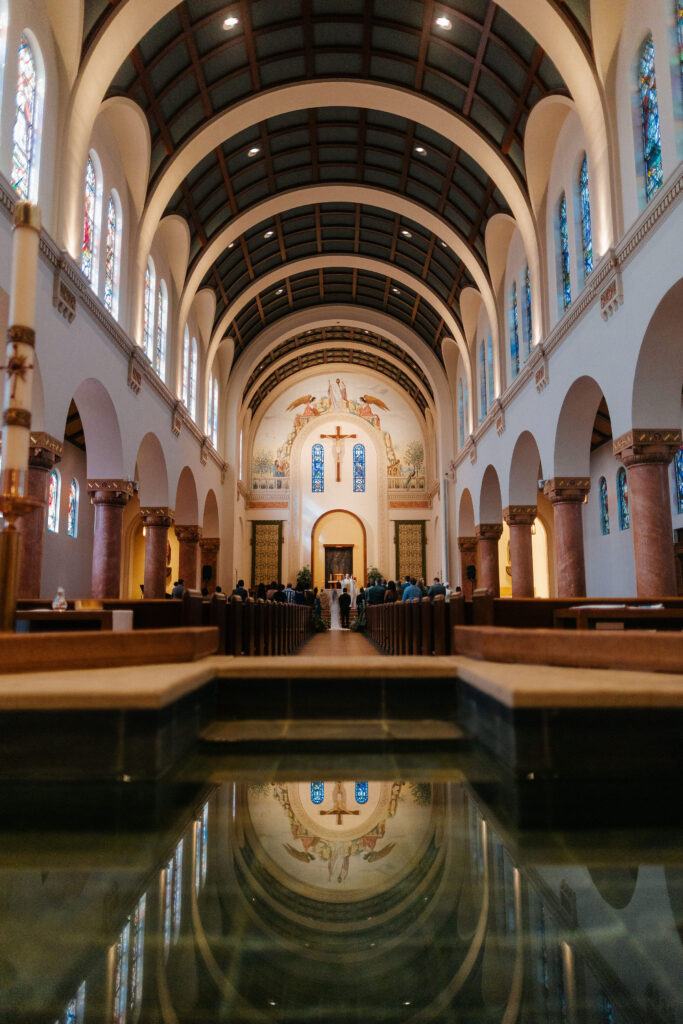
Majority of my weddings will take place at a non-denominational venue, typically where the evening reception is also located. This is definitely more of a regional trend because I am from the Bible Belt and church ceremonies still have a strong presence in that part of the country. Here in Washington, only about five percent of my weddings take place in a church. Within that small percentage, the couples who do choose a church ceremony are usually my Catholic couples.
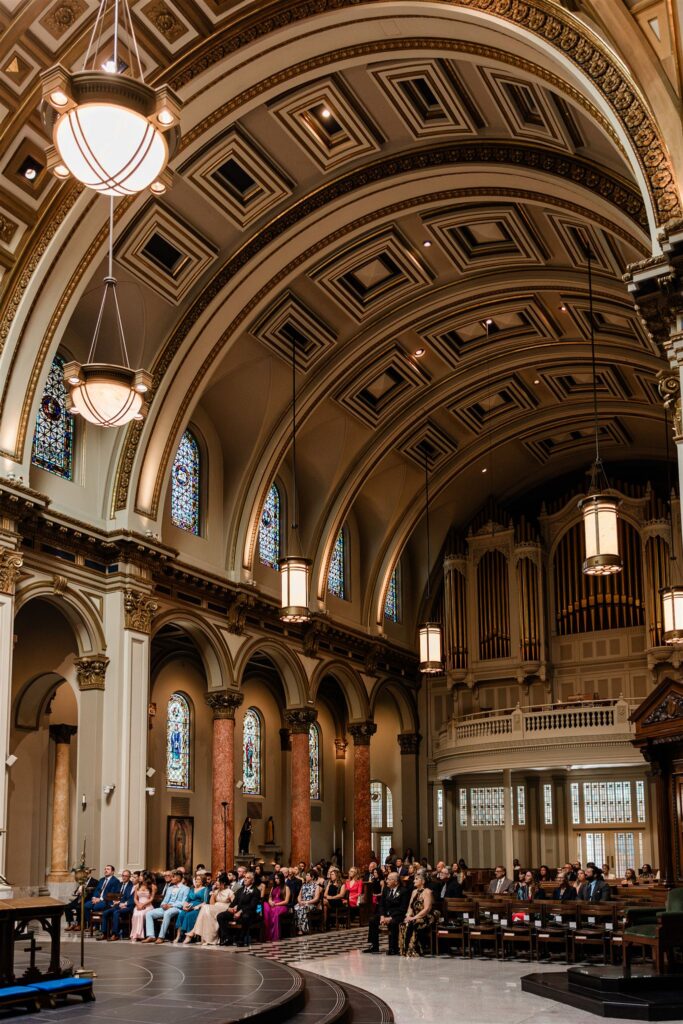
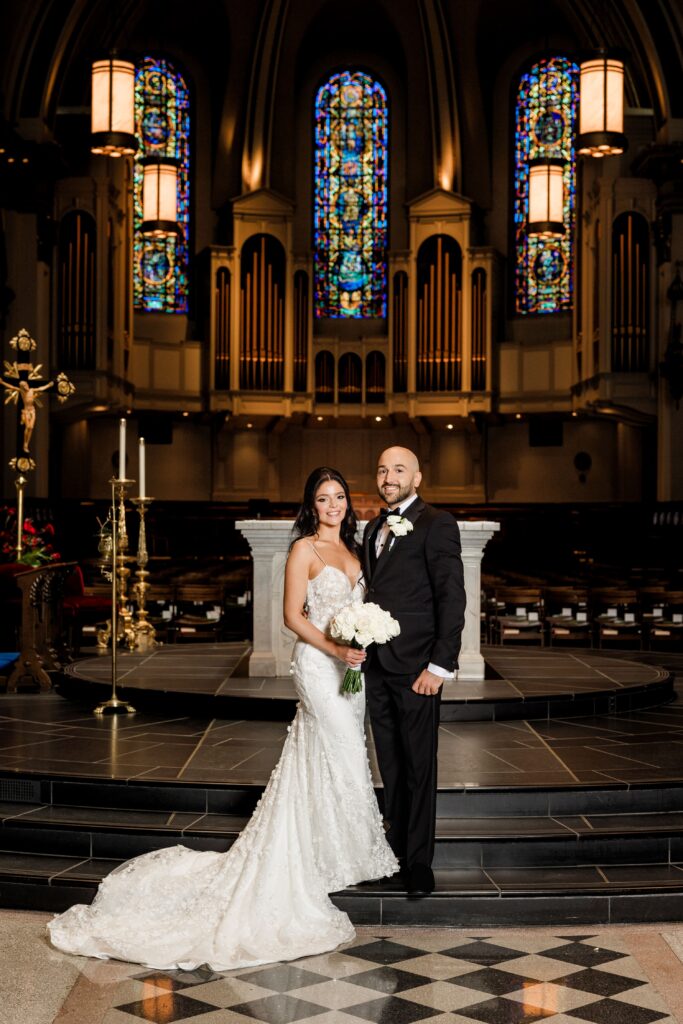
I do love a church wedding because Seattle has some truly beautiful and historic sanctuaries. These spaces have stained-glass windows, vaulted ceilings, and rich architectural details that you simply will not find at most non-denominational venues. However, planning a church wedding comes with its own set of logistics, expectations, and quirks that differ from the typical Washington wedding venue. Here is what to know as you begin planning.
Working With Church
Working with a church is very different than working with an event venue. Many churches still operate with fairly traditional or “closed-loop” systems, and each church has its own personality and expectations.
A few things to ask upfront:
1. What is their policy around wedding planners?
Some churches love working with planners. Others… don’t. When you are booking your ceremony venue have a clear idea of what the churches role is during the planning process and the day itself.
This may include:
- running the rehearsal
- directing the ceremony procession
- acting as the onsite point of contact
- communicating only with the couple (even if you have full planning)
- music
I find that the majority of Catholic churches will not work with a planner. This doesn’t mean you can’t have a planner, it just means this portion of the day will be between you and the church. They will have a point person there that works with you and they will run the ceremony. It just puts more on you to communicate versus your planner advocating for you.
It’s not ideal from a planner’s perspective, but it’s a reality we regularly adapt to. The best approach is to understand their boundaries early so we can organize a plan that supports your day without stepping on toes.
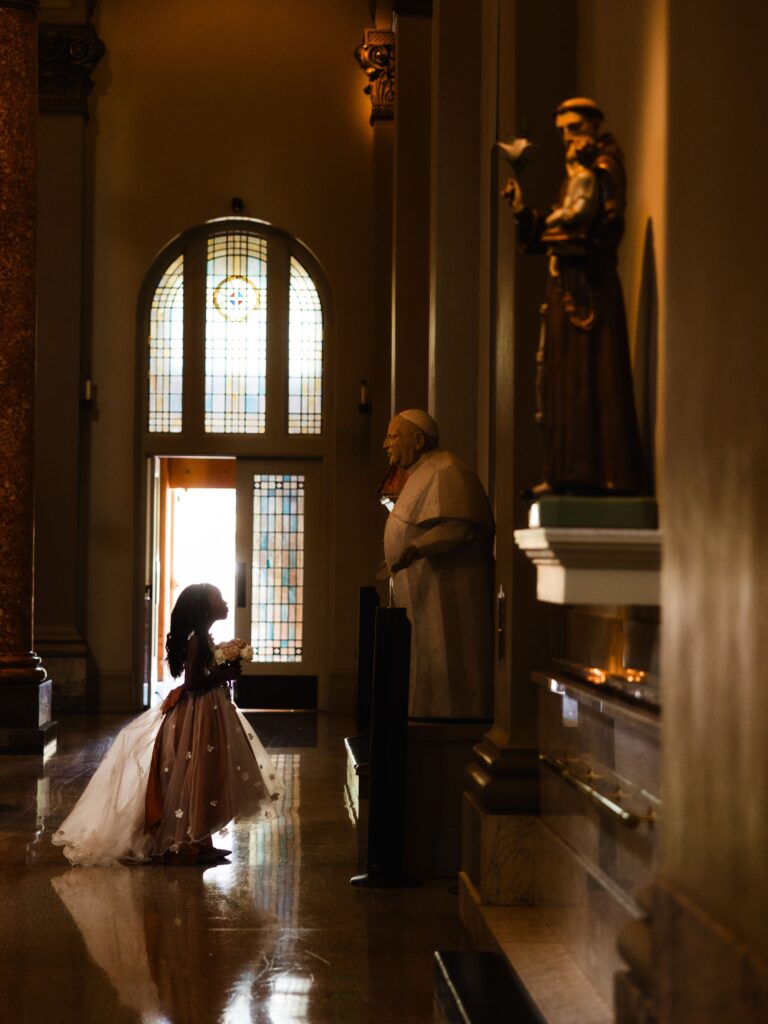
2. How do they prefer to communicate?
In most cases weddings are old school and the person running the weddings are usually elderly. This typically translates to limited communication, no emails, and all on phone.
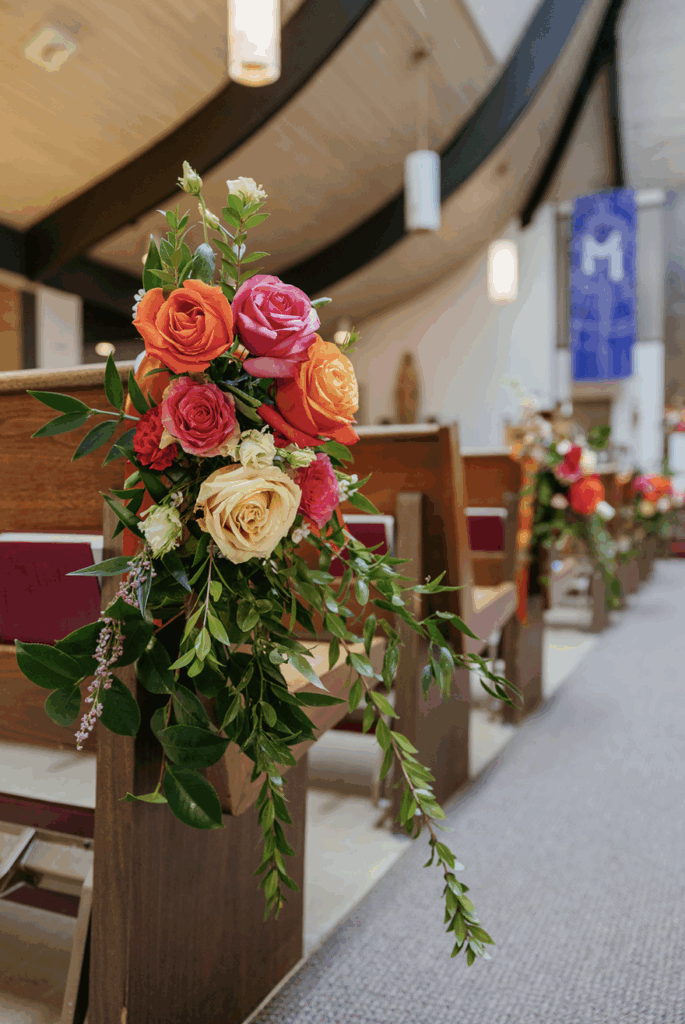
3. What are their decor policies?
Every church is different. Some allow florals at the altar. Some restrict aisle runners, candles, or installations. Others have extremely tight setup and breakdown windows.
Before dreaming up florals, we need to know:
- what’s allowed
- what’s restricted
- what their timeline is
Tip: Ask if they accept floral donations after the ceremony. Many churches will repurpose your arrangements for services or community use, which is both meaningful and logistically helpful.
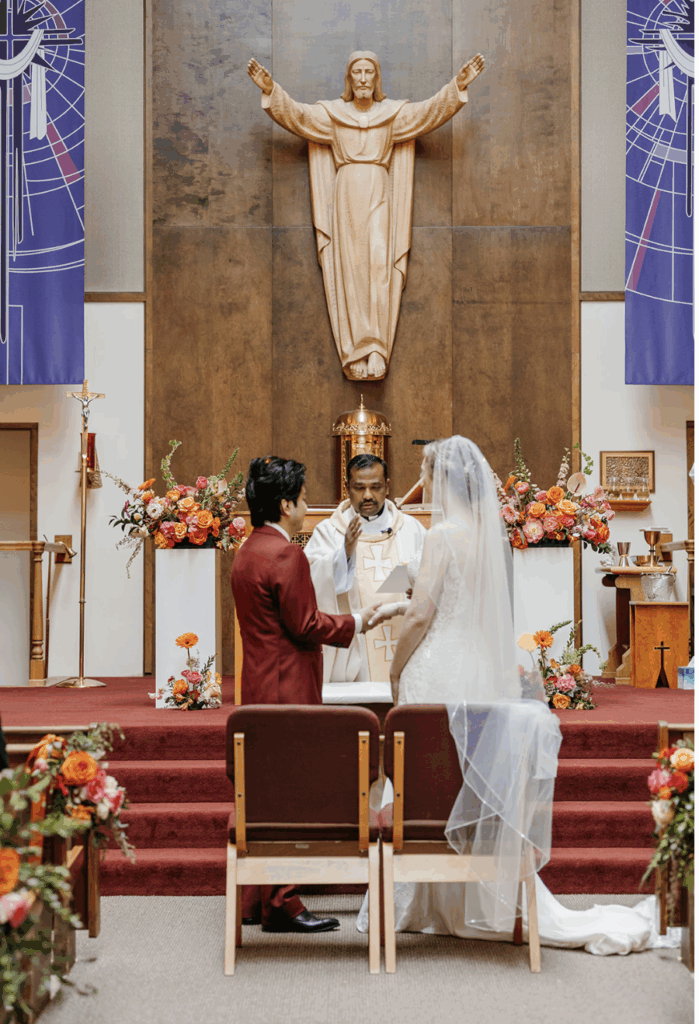
4. What are the fees and requirements?
Most churches charge a reservation or facility fee. They also may require additional requirments
- pre-marital counseling
- meetings with clergy
- paperwork
- proof of sacraments
- rehearsals scheduled at specific times
These aren’t difficult to navigate, but they do add steps, so it’s good to build them into your planning process early.
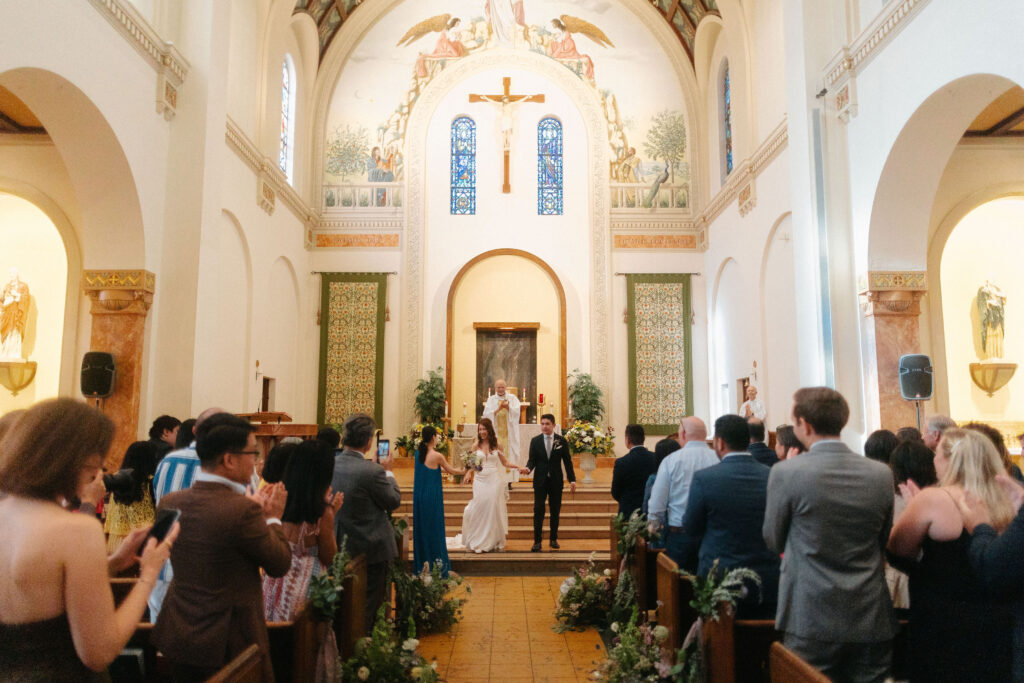
The Ceremony Gap
One of the biggest things my Catholic couples ask is how to handle the “time gap” between the ceremony and the reception. Catholic ceremonies are often held earlier in the day, frequently between 1:00–2:00 p.m., while receptions tend to begin around 5:00 p.m. That creates a natural lull in the schedule.
The honest answer?
The gap isn’t something you can fully eliminate, but you can be strategic.
A few approaches that work well:
Keep everything as centralized as possible.
If your church, photo locations, and reception venue are close to each other, guests can easily explore the area or return to their hotel without long travel times.
Offer ideas for your guests.
Nearby coffee shops, breweries, bookstores, waterfront strolls, or scenic lookouts can fill a quiet afternoon beautifully.
Use it to your advantage for portraits.
The gap actually gives you room for relaxed couple photos, wedding party shots, and family portraits without cramming everything into cocktail hour. Churches will typically have limited time after service for photos, so double check on when you need to be out of the church.
Plan a regroup moment.
Some couples use this window to freshen up, eat, or change into a second outfit. Treat it as built in breathing space.
The key is to embrace the gap, not fight it. Once your guests understand the flow of the day, it becomes a non issue.
Additional Vendor Cost
Photo/Video: You’ll have longer coverage time to incorporate this gap in the day. Of course you can get photos during this time but this gap means longer hours of coverage because they won’t split their coverage time.


